


A customer wants to compare three suppliers, understand a refund policy or find the best option for their budget. Instead of opening ten browser tabs, they ask an AI assistant one question. The answer may shape their shortlist before they visit a company website.
This does not mean conventional search has disappeared. It means a new layer has entered the customer journey: a system that can summarise, compare and interpret information on the customer’s behalf. For South African businesses, that is becoming a question of customer experience as much as search visibility.
The change is already visible in South Africa
The 2026 South African Customer Experience Report, drawing on research among 2,000 consumers and 56 business executives, offers a useful local snapshot. According to the report’s findings, 23% of surveyed consumers use AI search tools to compare prices and products, find deals or answer purchasing questions. That proportion has more than doubled in a year. At the same time, 75% of surveyed businesses reported no active strategy for managing how they appear in AI-generated answers. These are survey findings, not a claim that every South African customer behaves this way. Read the reported findings.
Economic pressure helps explain why this matters. In the same research, 72% of consumers said their financial circumstances had stagnated or worsened over the previous year. When buyers are carefully weighing value, convenience and risk, tools that help them compare options can become a meaningful part of how they decide. Source: Rogerwilco’s analysis of the 2026 report.
From a list of links to an interpreted answer
Traditional search often begins with a list of potential destinations: websites, directory entries, reviews, videos and product pages. The person decides which links to open and pieces together an answer. AI-assisted discovery can change the order of those steps. A user asks a question in ordinary language and receives a synthesis that may include comparisons, caveats, suggested options and source links.
Imagine a small business owner searching for a customer relationship management solution. They might ask: “What is the difference between a basic contact database and a CRM with marketing automation, and which is more practical for a five-person team?” The assistant may explain capabilities and trade-offs before any vendor receives a website visit.
That distinction creates an important new consideration: a customer’s first impression of a business may be an AI-generated interpretation of its public information. Such answers can be incomplete or wrong, and AI platforms differ in what they retrieve and cite. Businesses cannot fully control an assistant’s output, but they can make their underlying information easier to find and understand.
Your digital presence is part of your customer experience
The question is no longer only whether a website looks professional or ranks for a keyword. It is also whether a prospective customer—or a tool acting on their behalf—can reliably establish what a business offers.
Consider a hypothetical retailer with one price on a product page, a newer promotion visible only in a social-media image, delivery terms hidden inside a PDF, and business hours that disagree across directories. A human buyer would find this frustrating. An AI assistant may also struggle to resolve which version is accurate.
Better information quality is not a trick for influencing AI results. It is good customer service: clear services, current prices, accurate locations, understandable policies and consistent public details.
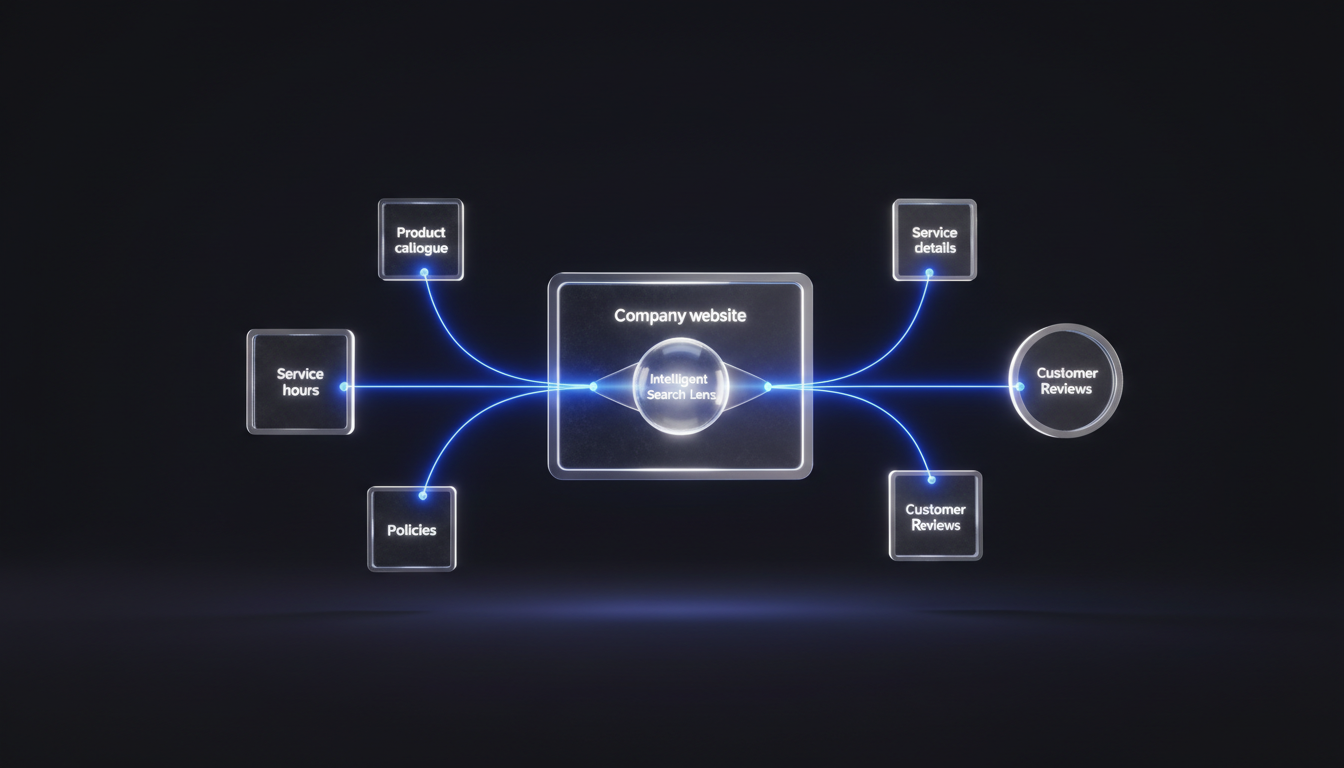
Four information layers to check
- What the business says: Its website, product and service pages, pricing, FAQs and customer-support information.
- What other sources say: Business listings, reputable directories, reviews, third-party articles and public profiles.
- What an AI system can access and interpret: Publicly available material, which depends on each tool’s retrieval methods and limitations.
- What the customer receives: An answer that may be helpful, partial, outdated or incorrect—and should not be treated as a guaranteed reflection of the business.
The customer experience starts before the first click
The same 2026 research found that 81% of surveyed consumers had experienced a negative customer experience in the previous 12 months, while only 24% said they post poor experiences publicly. In other words, a missing complaint or a quiet social profile is not proof that customers are happy. Source: African Marketing Confederation’s summary of the report.
If a prospective customer cannot establish basic facts before making contact, the business may never discover that an opportunity was lost. Information accuracy matters before the lead form, phone call or sales conversation begins.
There is also a trust question when businesses deploy AI in their own customer interactions. The report’s official findings show that 85% of consumers expect disclosure of customer-facing AI, yet only 21% of surveyed businesses have a formal policy for consistent disclosure. Clear communication about when customers are dealing with automation is part of responsible adoption.
AI is moving from answering to assisting with actions
Discovery is only one stage. In the 2026 South African report, 67% of surveyed consumers said they would be comfortable letting AI fill a shopping cart for review, and 62% would be comfortable letting it place a meal-delivery order. These figures reflect stated comfort, not evidence that those transactions are routinely happening. Source: 2026 CX findings.
For businesses, even a gradual shift toward AI-assisted actions raises practical questions. Are stock levels accurate? Are prices updated in one reliable place? Can a customer review an action before it is final? Are consent, security, refunds and support responsibilities clear? Moving from an answer to a transaction needs stronger safeguards than simply producing a useful summary.
A practical AI-discoverability audit for businesses
Rather than chasing a particular acronym or algorithm, start with the information a customer needs to make a confident decision. This checklist can be completed without buying a new software platform.
- Explain the offer clearly. Can someone unfamiliar with your company understand what you sell, who it is for and how it differs from alternatives?
- Check consistency. Compare prices, services, contact details, operating hours and policies across the website and key public listings.
- Answer real customer questions. Add useful FAQs about suitability, delivery, support, cancellation, returns and next steps.
- Use accessible page content. Put essential information in readable page text instead of relying entirely on images or inaccessible documents.
- Describe products and services precisely. Include limitations and conditions rather than only promotional claims.
- Use structured information where appropriate. Well-maintained page titles, descriptive headings, structured data and sensible internal links can help organise public information, without guaranteeing AI recommendations.
- Review independent sources. Check major business profiles, directories and third-party references for old or contradictory details.
- Test customer questions. Ask several AI assistants the questions customers might ask, and independently verify answers rather than relying on one response.
- Assign information ownership. Decide who updates each public source when prices, opening hours, features or policies change.
- Be transparent about automation. Make it clear when a customer is interacting with AI and provide a reliable path to human help when needed.
What should businesses measure?
An AI answer may influence a decision without sending a measurable referral visit. That makes attribution difficult. Search traffic and website conversions still matter, but they do not tell the entire story.
A sensible starting point is to track recurring customer questions, the consistency of business listings, the freshness of high-value pages, leads and conversions from identifiable channels, and how often AI-assisted checks surface material inaccuracies. Treat assistant-mention tests as directional observations, not as a stable or universal ranking.
Good information management also depends on what happens inside the organisation. If marketing, sales and support rely on different records, customers may receive contradictory messages even after they make contact. This is one reason customer relationship management and connected processes remain relevant alongside public website improvements.
The goal is better information, not simply more AI visibility
Businesses have spent years making websites useful for people and understandable to search engines. Now they must also consider the systems customers use to interpret that information.
AI-assisted search is emerging alongside established discovery channels, not replacing them overnight. Businesses do not need to control every answer an AI platform generates. They need to reduce the gap between what they offer, what their public information communicates and what a customer can confidently establish.
Accuracy, accessibility, consistency and transparency are practical places to begin. They improve the experience whether a customer arrives through a search engine, a referral, a social post, an AI assistant or a direct conversation.
Sources and further reading
- 2026 South African Customer Experience Report — report overview and consumer findings.
- African Marketing Confederation: AI search behaviour by SA consumers — summary of survey findings.
- Rogerwilco: 2026 SA CX Report analysis — economic context and customer behaviour.
Editorial note: This article interprets published survey findings for business readers. Statistics reflect the surveyed respondents and should not be treated as forecasts or guarantees of visibility on any AI platform.